






|
Reinforcing Bar Identification Reinforcing Bar Identification Each individual reinforcing bar is manufactured with a series of individual markings: ...Read more |

|
PURPOSES AND TYPES OF REINFORCING STEEL PART1 Reinforced concrete was designed on the principle that steel and concrete act together in resisting force. Concrete is strong in compression but weak in tension. The tensile str ...Read more |

|
PURPOSES AND TYPES OF REINFORCING STEEL PART2 Reinforcing bars are hot-rolled from a variety of steels in several different strength grades. Most reinforcing bars are rolled from new steel billets, but some are rolled from ...Read more |

|
How to Identify Reinforcing Bars? In general terms, we learn some rebars have the same appearance so that lots of people can not identify the rebar themselves, which may cause mistake easily. In order to avoid t ...Read more |
|
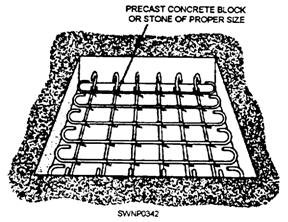
PLACING AND TYING REINFORCING STEEL PART1 Before you place reinforcing steel in forms, all form oiling should be completed. Oil on reinforcing bars should be avoided because it reduces the bond between the bars and the ...Read more |

|
PLACING AND TYING REINFORCING STEEL PART2 Figure 7-20.-Rebar hung in place. inches (76.2 mm) of concrete between the steel and the ground. If the concrete surface is to be in contact with the ground or exposed to t ...Read more |

|
PLACING AND TYING REINFORCING STEEL PART3 Figure 7-23.-Correct and Incorrect placement of reinforcement for an inside corner. square, and the end of the top bar resting on it is cut in a bevel fashion, thus permitting ...Read more |







© 2017 Y.P.D. INTERGROUP CO.,LTD